Rats in the Attic: Why Rodent Proofing and Insulation Replacement Go Hand in Hand
If you've heard scratching in your ceiling, noticed a musty smell coming through your vents, or had a pest control company confirm rodent activity in your attic — you're dealing with more than just a pest problem. Rats and mice don't just pass through an attic. They nest in it, tunnel through it, and leave contamination behind that affects your home's air quality long after the rodents are gone.
Here's what most homeowners don't realize: getting rid of the rodents is only half the job. The insulation they lived in almost always needs to go too.
What Rodents Actually Do to Attic Insulation
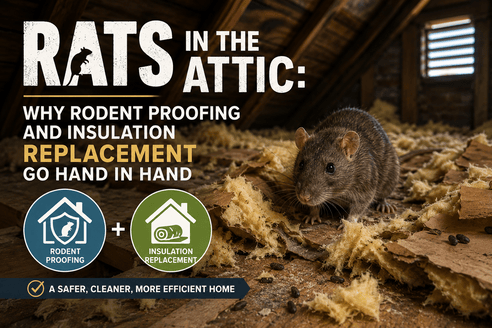
Rats and mice are drawn to attic insulation because it's warm, soft, and safe from predators. Once inside, they cause damage that goes well beyond what's visible at first glance:
- They tunnel through and compress the insulation — destroying its R-value and leaving large sections that no longer perform
- They nest inside it — using shredded insulation, paper, and other materials to build nesting areas that are heavily contaminated
- They urinate and leave droppings throughout — saturating insulation with bacteria and pathogens that don't go away on their own
- They chew through wiring — a fire hazard that can be hidden inside damaged insulation
- They create entry and exit trails — worn paths through the insulation that expose your attic structure to ongoing air leakage
By the time most homeowners discover a rodent problem, the insulation has typically been compromised across a significant portion of the attic — not just in one isolated area.
Why Pest Control Alone Isn't Enough
Pest control companies do an important job — they eliminate the active infestation and help identify how rodents are getting in. But most pest control treatments stop there. The contaminated insulation stays in your attic, and with it:
- Rodent droppings, urine, and nesting material continue circulating through your home's air supply
- Compressed and damaged insulation keeps driving up your energy bills
- Remaining scent trails attract new rodents to the same entry points
- Hidden structural damage and chewed wiring go unaddressed
A pest control treatment without insulation remediation is like treating a wound without cleaning it first. The surface problem is addressed but the underlying damage remains.
The Right Way to Handle a Rodent Problem in Your Attic
A complete rodent attic remediation involves several steps — and insulation is central to all of them:
Step 1 — Inspection A thorough assessment of the attic to identify the extent of rodent activity, the condition of the insulation, entry points, and any structural or wiring concerns.
Step 2 — Rodent Proofing Sealing all entry points — gaps in the roofline, vents, eaves, and any other penetrations rodents are using to access your attic. This step is critical. Without it, new rodents will simply move back in after the insulation is replaced.
Step 3 — Contaminated Insulation Removal All damaged and contaminated insulation is removed using commercial-grade vacuum equipment. This is not a job for a shop vac and a dust mask — proper removal requires protective equipment and correct disposal of contaminated material.
Step 4 — Attic Cleaning and Sanitation Once insulation is removed, the attic structure is cleaned and treated to eliminate bacteria, pathogens, and odors left behind by rodent activity. Skipping this step means installing new insulation into a contaminated space.
Step 5 — New Insulation Installation Fresh, clean insulation is installed to the correct R-value for your home. With a clean, sealed attic, your new insulation will perform the way it's supposed to — improving comfort and reducing energy costs.
How to Tell If Your Attic Has Rodent Damage
You don't always hear rodents in the ceiling. These are the signs to watch for:
- Scratching, scurrying, or squeaking sounds — especially at night
- Musty, ammonia-like odor coming from vents or the attic hatch
- Rising energy bills without a clear cause
- Droppings in the garage, attic hatch area, or along exterior walls
- Chewed wiring, wood, or stored items in the attic
- Evidence of nesting material near vents or insulation
If you notice any of these, the earlier you act the better. Rodent populations grow quickly and the damage compounds with every season they're left unaddressed.
Does Homeowner's Insurance Cover Rodent Damage to Insulation?
In most cases, no. Standard homeowner's insurance policies typically exclude damage caused by rodents and other pests, classifying it as a maintenance issue rather than a sudden loss. It's worth checking your specific policy, but most Pasadena homeowners pay for rodent insulation remediation out of pocket — which makes getting it done efficiently and correctly the first time even more important.
Serving Pasadena and the San Gabriel Valley
At Attic Squad Insulation Services, we handle the complete rodent insulation remediation process — from inspection and rodent proofing through contaminated insulation removal, attic sanitation, and new insulation installation. Our licensed team serves Pasadena, Arcadia, Altadena, San Marino, Monrovia, Temple City, Sierra Madre, and the surrounding San Gabriel Valley.
If you suspect rodent activity in your attic — or just want to know what's up there — start with a free, no-pressure attic inspection.
Call Attic Squad Insulation Services at (626) 649-3652 or schedule your free inspection online.
You might also like